
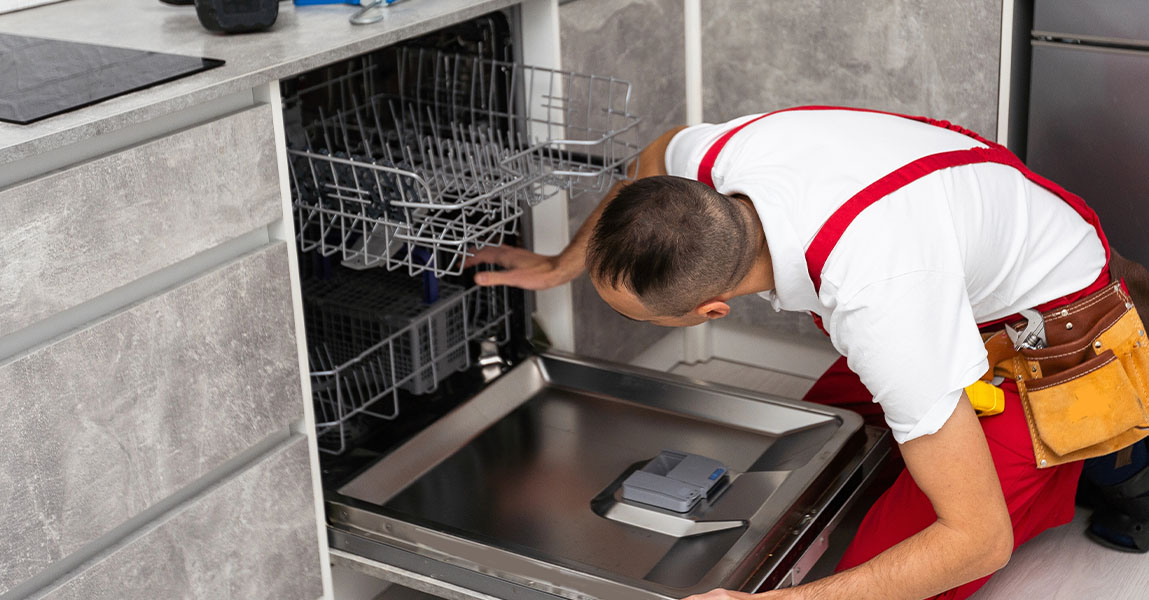
A dishwasher should make your kitchen smell cleaner, not worse. When it starts giving off a bad odor, something inside isn’t working as it should. The smell could be coming from food buildup, mold growth, or a drainage problem that keeps dirty water trapped inside. Understanding what causes the odor helps you fix it for good and prevent it from coming back.
Food Residue and Hidden Grease
Every dishwasher collects bits of food during wash cycles. These small particles can get stuck in the filter, spray arms, or door seals, where they slowly break down and release unpleasant smells. Even a thin layer of grease on the walls or in the drain can trap debris and cause bacteria to grow.
We often forget that the dishwasher needs cleaning just like any other appliance. Rinsing dishes before loading helps, but over time the filter and interior parts still collect residue. A good habit is to remove the bottom rack and check the filter once a week. Rinse it under warm water and scrub lightly with a brush. This one simple routine can make a big difference in keeping odors away.
Standing Water in the Bottom
If you notice a sour or musty smell when you open the door, check for standing water in the tub. Stagnant water is usually a sign that the drain isn’t working properly. It could be a clog in the drain hose or a faulty pump.
To test this, run the dishwasher on a rinse cycle and see if the water drains completely. If it doesn’t, remove the bottom rack and inspect the drain area. Clean away any visible debris and check for grease buildup around the drain opening. If the water still pools after cleaning, the issue may be deeper in the system and require professional inspection. When drainage problems persist, you can reach out for appliance repair services in Surrey to identify and fix the cause before it damages the motor or internal parts.
Mold and Mildew Growth
The warm, humid environment inside a dishwasher is ideal for mold if moisture gets trapped after each cycle. Rubber door seals, filter housings, and the inside of the detergent dispenser are the most common spots for mildew to develop.
You can prevent this by leaving the door slightly open after every cycle. Air circulation helps dry out the interior completely. Wiping down the rubber gasket with a vinegar-soaked cloth once a week also discourages mold growth. If you already notice black spots or a strong musty odor, remove the racks and run an empty cycle with two cups of white vinegar placed in a bowl on the top rack. Vinegar cuts through buildup and disinfects naturally without damaging the internal parts.
Dirty Spray Arms
Clogged spray arms can trap bits of food and soap scum inside their small holes, creating an unpleasant smell and reducing cleaning performance. When water cannot flow properly through the arms, it leaves residue on the dishes and inside the tub.
You can remove the spray arms easily in most models. Soak them in warm water mixed with vinegar and a small amount of baking soda. Use a toothpick or thin wire to clear out each hole. Once cleaned, rinse thoroughly before reinstalling. This simple step improves not just the smell but also how efficiently the dishwasher cleans.
Faulty Check Valve
If odors persist even after thorough cleaning, the problem might come from the drain check valve. This valve keeps wastewater from flowing back into the dishwasher. When it stops sealing correctly, dirty water from the drain can re-enter the tub between cycles and create a sewage-like smell.
Replacing the valve is often a quick job for a technician, and it can restore proper drainage immediately. If you’ve noticed a lingering odor combined with standing water or dishes that smell bad right after washing, it’s worth having the valve inspected.
Plastic and Rubber Odors
Sometimes the smell doesn’t come from food at all. New dishwashers or recently replaced plastic parts may release a faint chemical odor during the first few uses. This is harmless and fades after a few hot cycles. However, if you detect a burnt-plastic smell, stop the machine and check for utensils or items that may have fallen onto the heating element. Melting plastic can leave behind a persistent odor and may damage the heater.
To neutralize lingering plastic smells, place a bowl of baking soda on the top rack and run a full cycle on high heat. Baking soda absorbs strong odors and helps restore a neutral scent.
Drain Hose Issues
Another hidden source of bad dishwasher odor is the drain hose. When the hose sags or becomes partially blocked, food particles can settle inside. This trapped material rots over time and pushes the smell back into the dishwasher.
Make sure the hose forms a high loop from the dishwasher to the sink drain or garbage disposal. The loop prevents dirty water from flowing back in. If your hose is old or coated inside with grease, it’s best to replace it altogether. A clear drain line keeps both your dishwasher and sink smelling fresh.
Using the Right Detergent
Sometimes the cause of odor is simply using too much or the wrong type of detergent. Excess soap creates residue that traps dirt and promotes bacterial growth. Powder detergents often leave behind more buildup than tablets or gels.
Use the amount recommended on the package, and occasionally run a rinse cycle with vinegar to dissolve any soap film. Hard water can also make detergents less effective, leading to cloudy residue and odor. Installing a small water softener or using detergent designed for hard water can help maintain a cleaner interior.
Deep Cleaning Routine
Even a well-maintained dishwasher benefits from a deep clean every few months. Start by removing the racks and cleaning the filter and spray arms. Then wipe all surfaces with a soft cloth dipped in vinegar and warm water. Focus on the door edges and around the gasket where grime tends to collect.
After that, sprinkle a cup of baking soda on the bottom and run a short hot cycle. Baking soda not only neutralizes odors but also removes light stains. Combining vinegar and baking soda in separate cycles ensures both disinfecting and deodorizing without harsh chemicals.
Garbage Disposal Connection
Many dishwashers drain through the same line as the garbage disposal. If that system gets clogged, it can send odors right back into the dishwasher. Before starting the dishwasher, always run the disposal for a few seconds with cold water to clear the line. This small habit helps keep everything flowing freely.
If the disposal is new, make sure the knockout plug in the connection line was removed during installation. If it wasn’t, the dishwasher won’t drain properly, and stale water will collect in the base.
When the Smell Keeps Returning
If you’ve cleaned every part and the smell still returns, there could be a deeper mechanical issue. A failing motor or damaged seals can trap moisture in areas that aren’t visible. In those cases, professional service can save you from ongoing frustration.
Experienced technicians can inspect internal components, test electrical parts, and confirm whether the problem lies in the pump, valve, or motor assembly. For complex or recurring issues, it helps to schedule a visit through the dishwasher repair Surrey service page to have the problem accurately diagnosed and fixed.
Preventing Odor in the Long Run
Keeping the dishwasher fresh is easier once it’s clean. Run a hot cycle at least once a week, even if it’s nearly empty, to flush out residues. Avoid letting dirty dishes sit inside for days. Rinse large food particles off before loading, and always check the filter after washing greasy pans.
Regularly cleaning the gasket, using vinegar or baking soda, and leaving the door slightly open after each cycle all help prevent moisture and odor buildup. If your kitchen has a history of drain smells, clean the garbage disposal and sink drain monthly to maintain good airflow and sanitation.
Practical Extra Tip: Use Citric Acid for Deep Odor Removal
Most people know about vinegar and baking soda, but citric acid works even better for persistent odors caused by mineral deposits and hard water buildup. You can find it in powder form in most grocery stores. Add a few tablespoons to the detergent compartment and run an empty hot cycle. It dissolves calcium and lime buildup that trap bacteria and smells, leaving the dishwasher spotless and odor-free.
When to Ask for Help
If after cleaning, rinsing, and running vinegar cycles the smell still comes back, there may be a hidden mechanical issue. Persistent odors often point to drainage, pump, or valve problems that are not easy to access without the right tools. In these cases, we recommend reaching out to professionals through the contact us page to schedule an inspection. Quick attention can prevent more serious damage and restore your dishwasher’s performance before it worsens.
FAQ
Why does my dishwasher smell bad even when it’s empty?
Odor can remain if food particles or grease stay in the filter or drain system. Cleaning those areas usually removes the smell.
Can vinegar damage the dishwasher?
No, vinegar is safe for most parts. It helps dissolve grease and remove buildup naturally. Just avoid mixing it with bleach-based cleaners.
How often should I clean the dishwasher filter?
For most households, once a week is ideal. If you use the dishwasher daily, check it more often to keep debris from collecting.
What if my dishwasher smells like sewage?
A sewage smell often means dirty water is backing up through the drain hose or check valve. Cleaning or replacing these parts should stop the odor.
Should I use commercial dishwasher cleaners?
They can help, but basic vinegar and baking soda methods work just as well. Use store-bought cleaners only if the odor persists after natural cleaning.